1.Introduction to the MERN Stack and Its Components

The MERN stack is a popular combination of technologies for building web and mobile applications. It includes four main components: MongoDB, Express.js, React, and Node.js.
Each component plays a unique role in the development process, contributing to the full-stack experience.
-
MongoDB
- MongoDB is a NoSQL database that stores data in flexible JSON-like documents.
- It’s designed to handle unstructured or semi-structured data, making it adaptable for various data types.
- MongoDB’s scalability and high performance make it ideal for applications with changing data needs.
-
Express.js
- Express.js is a lightweight web application framework for Node.js.
- It simplifies the creation of robust APIs and web applications by providing a set of tools and features.
- Express.js handles routing, middleware, and other backend functionalities efficiently.
-
React
- React is a JavaScript library for building user interfaces.
- It’s particularly powerful for creating dynamic, interactive, and single-page applications.
- React’s component-based structure promotes reusability and maintainability in UI development.
-
Node.js
- Node.js is a runtime environment that lets developers run JavaScript on the server side.
- It enables building scalable and efficient server applications.
- Node.js is known for its non-blocking I/O, which allows handling a large number of concurrent connections.
By combining MongoDB, Express.js, React, and Node.js, the MERN stack offers a comprehensive toolkit for developing full-stack applications that cater to both web and mobile platforms. Each component contributes its strengths, resulting in a seamless and powerful development experience. Hire MERN Stack Developers to leverage the power of a unified technology stack, enabling seamless integration of both frontend and backend functionalities in your web and mobile applications.
2.Understanding RESTful APIs
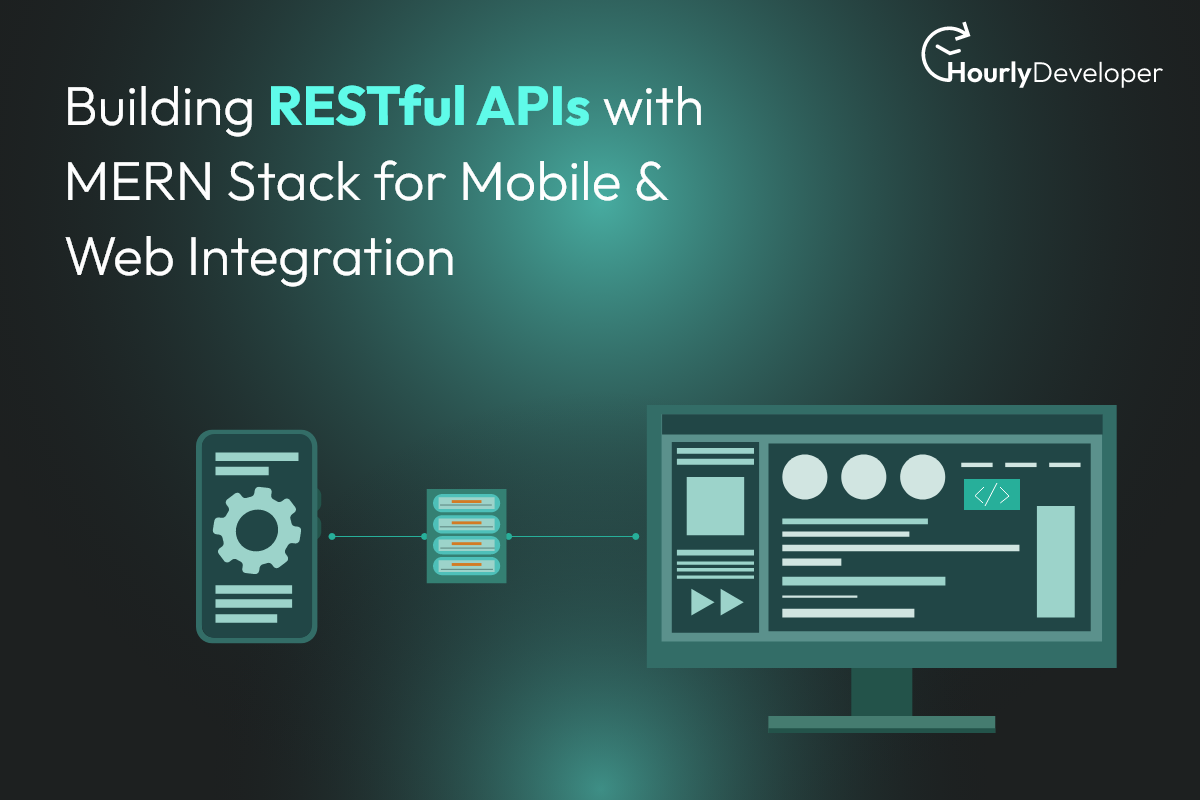
RESTful APIs, or Representational State Transfer APIs, are a fundamental concept in modern application development. They provide a structured way of interacting with resources over the web. RESTful APIs follow a set of principles, such as statelessness and the usage of HTTP methods, to facilitate efficient data exchange. This architecture enables seamless communication between diverse applications, making it a perfect fit for building integrated web and mobile solutions.
3.Why Choose MERN Stack Development for Building RESTful APIs?
- Full-Stack Synergy: MERN combines MongoDB, Express.js, React, and Node.js, providing a cohesive environment for both frontend and backend development.
- Uniform Language: JavaScript is used across the entire stack, reducing the need to switch between different programming languages.
- Efficiency: React’s component-based architecture speeds up UI development, while Node.js event-driven, non-blocking I/O handles server-side operations efficiently.
- Real-Time Interactivity: React enables real-time updates without page refreshes, making applications highly responsive and interactive.
- Modular Development: Components in React and middleware in Express.js promote modular development, leading to maintainable and scalable code.
- Data Flexibility: MongoDB’s NoSQL database accommodates evolving data structures, making it suitable for dynamic applications.
- Rapid Prototyping: The MERN stack’s tools and libraries facilitate quick prototyping and iteration.
- Rich Ecosystem: A wealth of libraries, frameworks, and community support is available for each component, easing development challenges.
- Cross-Platform: APIs built using the MERN stack can serve both web and mobile applications, streamlining development efforts.
- Scalability: Node.js’s asynchronous architecture and MongoDB’s horizontal scaling support help applications handle increased loads.
- Cost-Effectiveness: Open-source nature of the MERN components reduces software licensing costs.
- Cloud Integration: MERN applications can be easily deployed on cloud platforms like AWS, Azure, or Heroku.
- RESTful APIs: Express.js simplifies API development, allowing seamless integration with frontend frameworks like React.
Choosing the MERN stack for building RESTful APIs combines powerful technologies that work harmoniously, enabling efficient development, scalability, and a rich user experience across different platforms. For a robust and efficient development process, consider the option to hire dedicated MERN Stack developers who bring specialized expertise to your project.
4.Conclusion
Building RESTful APIs with the MERN stack for web and mobile integration is a dynamic process that requires a deep understanding of each technology layer. By hiring dedicated MERN stack developers, you can tap into their expertise to create APIs that are robust, secure, and optimized for both web and mobile platforms. With the right team, your API can serve as the backbone of a seamless and integrated application experience.

 Back to Blog